Happy 100th Birthday, William S. Burroughs
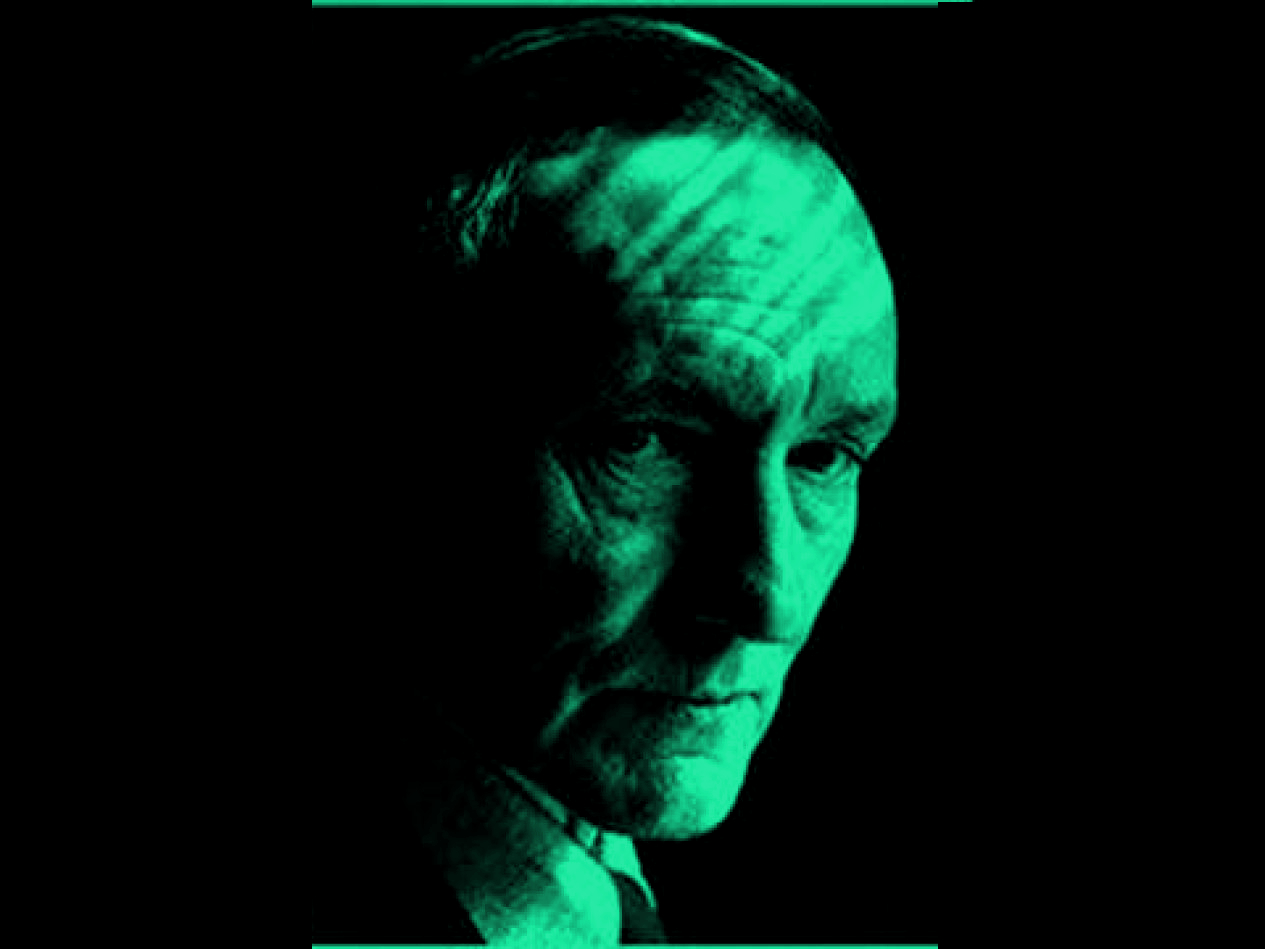
Just Say No to Drug Hysteria ~ William S. Burroughs (February 5, 1914 - August 2, 1997)
An interesting case of mass hysteria is described in a book called The Medical Detectives, by Berton Roueche. The outbreak occurred at the Bay Harbor Elementary School in Dade County, Florida. A girl named Sandy, who was slightly ill with the flu, collapsed in the school cafeteria and was carried out on a stretcher as the next shift of students was coming in.
Sandy, it seems, was sort of a leader. In any case, the students started keeling over in droves. An officer from the Department of Public Health was dispatched to the scene. Fortunately, he recalled a similar case some years back from another high school, and quickly made a diagnosis of mass hysteria.
The remedy is very simple -- get back to a calm, normal routine as expeditiously as possible. Get the children back to their classes. And that was the end of the outbreak. However, if the hysteria is not recognized and acted upon, it will go on and get worse and worse, as happened in the previous outbreak.
When hysteria is deliberately and systematically cultivated and fomented by a governing party, it can be relied upon to get worse and worse, to spread and deepen. Recent examples are Hitler's anti-semitic hysteria and present-day drug hysteria. The remedy is simple -- a calm, objective, common-sense approach.
Remember that during the nineteenth and early twentieth centuries -- the "good old days," which conservatives so fondly evoke -- opiates, cannabis tinctures, and cocaine were sold across the counter from sea to shining sea, and the United States did not founder as a result. There's no way to know exactly how many addicts there were, but my guess would be: surprisingly few. Many people simply don't like these drugs.
In England, before America persuaded the English government to adopt our own tried-and-failed, police-and-sanction approach, any addict could get heroin on prescription and fill his script on the National Health. As a result there was no black market, since no profit was involved. In 1957 there were about 500 addicts in the U.K., and two narcotics officers for metropolitan London. Now England presents the same dreary spectrum as the USA -- thousands of addicts, hundreds of drug agents, some of them on the take, a flourishing black market, addicts dying from O.D.'s and contaminated heroin.
Obviously the sane, common-sense solution is maintenance for those who cannot or will not quit, and effective treatment for those who want to quit. The only treatment currently available is abrupt withdrawal, or withdrawal with substitute drugs. Withdrawal treatment dates back to early nineteenth-century British drug essayist Thomas De Quincey. Surely they could do better than that. Indeed, they could, but they show no signs of doing so.
Consider alternative therapy that is available: acupuncture, apomorphine. Both therapies work because they stimulate the production of endorphins, the body's natural regulators and painkillers. The discovery and isolation of endorphins has been called the most crucial breakthrough toward the understanding and treatment of addiction since addiction was first recognized as a syndrome.
If you don't use it, you lose it. The addict is ingesting an artificial painkiller, so his body ceases to produce endorphins. If opiates are then withdrawn, he is left without the body's natural painkiller, and what would be normally minor discomfort becomes excruciatingly painful, until the body readjusts and produces endorphins. This is the basic mechanism of addiction, and explains why any agent that stimulates the production of endorphins will afford some relief from withdrawal symptoms.
De Quincey suggested that there may be a constitutional predisposition to the use of opium, and modern researchers speculate that addicts may be genetically deficient in insulin. I have heard from one addict who received an experimental injection of endorphins during heroin withdrawal. He reported that there was none of the usual euphoria experienced from an opiate injection, but rather "a shift of gears," and he was suddenly free from withdrawal symptoms. Researchers believe that endorphins, since they are a natural body substance, may not be addictive. Only widespread testing can answer this question.
Since endorphins were first extracted from animal brains, they are at present prohibitively expensive -- $2,000 a treatment -- just as cortisone was very expensive when it was first extracted. Synthesis has brought the price of cortisone within reach of any patient who needs it. Is any of the $7.9 billion in Bush's latest War on Drugs plan marked for the synthesis and widespread testing of endorphins? I doubt if many of the congressmen who draft "tough drug bills" even know what endorphins are. And the same goes for the so-called drug experts who advise President Bush.
Billions for ineffectual enforcement.
Nothing for effective treatment.
I quote from a reading I have delivered to many receptive university audiences. This is an old number that is once again current and timely. It is called "MOB," for "My Own Business," drawing a line between the Johnsons and the shits:
This planet could be a reasonably pleasant place to live, if everybody could just mind his own business and let others do the same. But a wise old black faggot said to me years ago: "Some people are shits, darling."
I was never able to forget it.
The mark of a hard-core shit is that he has to be RIGHT. He is incapable of minding his own business, because he has no business of his own to mind. He is a professional minder of other people's business.
An example of the genre is the late Henry J. Anslinger, former Commissioner of Narcotics. "The laws must reflect society's disapproval of the addict," he said -- a disapproval that he took every opportunity to foment. Such people poison the air we breathe with the blight of their disapproval -- Southern lawmen feeling their nigger notches, decent churchgoing women with pinched, mean, evil faces.
"Any form of maintenance is immoral," said Harry, thus rejecting the obvious solution to the so-called drug problem.
On the other hand, a Johnson minds his own business. He doesn't rush to the law if he smells pot or opium in the hall. Doesn't care about the call girl on the second floor, or the fags in the back room. But he will give help when help is needed. He won't stand by when someone is drowning or under physical attack, or when animals are being abused. He figures things like that are everybody's business.
Then along came Ronnie and Nancy, hand in hand, to tell us nobody has the right to mind his own business:
"Indifference is not an option. Only outspoken insistence that drug use will not be tolerated."
Everyone is obliged to become hysterical at the mere thoughts of drug use, just as office workers in Orwell's 1984 were obligated to scream curses, like Pavlov's frothing dogs, when the enemy leader appeared on screen. And they'd better scream loud and ugly.
William von Raab, former head of U.S. Customs, went even further: "This is a war, and anyone who even suggests a tolerant attitude toward drug use should be considered a traitor."
Recollect during the Dexter Manley famous-athlete-cocaine-dealer flap, "Eyewitness News" was prowling the streets, sticking its mike in people's faces. One horrible biddy stated:
"Well, I think making the money they do, they should serve as an example."
She gets plenty of mike time.
And here a black cat, working on some underground cables, straightens up and says, "I think if someone uses drugs, it's his own bus--"
He didn't even get the word out before they jerked the mike away. Freedom of the press to select what they want to hear, and call it the voice of the people.
* * * * *
Urine tests! Our pioneer ancestors would piss in their graves at the thought of urine tests to decide whether a man is competent to do his job. The measure of competence is performance. When told that General Grant was a heavy drinker, Lincoln said: "Find out what brand of whiskey he drinks, and distribute it to my other generals."
Doctor William Halsted has been called the "Father of American surgery." A brilliant and innovative practitioner, he introduced antiseptic procedures at a time when, far from donning rubber gloves, surgeons did not even wash their hands, and the death rate from postoperative infection ran as high as 80 percent. Doctor Halsted was a lifelong morphine addict. But he could still hack it and hack it good, and he lost no patients because of his personal habit. In those "good old days," a man’s personal habits were personal and private. Now even a citizen’s blood and urine are subject to arbitrary seizure and search.
The world's greatest detective could not have survived a urine test. "Which is it this time, Holmes, cocaine or morphine?"
"Both, Watson -- a speed ball."
* * * * *
It is disquieting to speculate what may lurk behind this colossal red herring of the War on Drugs -- a war neither likely to, nor designed to, succeed. One thing is obvious: old, clean money and new, dirty money are shaking hands under the table. And the old tried-and-failed police approach will continue to escalate at the expense of any allocations for treatment and research. In politics, if something doesn’t work, that is the best reason to go on doing it. If something looks like it might work, stay well away. Things like that could make waves, and the boys at the top, they don’t like waves.
Anslinger's "missionary work," as he called it, has found fertile ground in Malaysia, where there is a mandatory death penalty for possession of a half ounce or more of heroin or morphine or seven or more ounces of cannabis. (No distinction between hard and soft drugs in Malaysia; it's all "Dadah.") Anyone suspected of trafficking can be held two years without trial. Urine tests are a prerequisite for entry to high schools and universities.
Mahathir Bin Mohamed, Prime Minister of Malaysia, has launched an all-out radio and TV campaign to create a "drug-hating personality." He is said to command widespread support for his drug policies. So did Hitler command widespread support for his anti-Semitic program. Just substitute the word "addict" for "Jew," and Der Sturmer storms again. Der Sturmer was Julius Streicher's anti-Semitic rag, designed to create a Jew-hating personality.
In order to get to the bottom line of any issue, ask yourself: "Cui bono? -- Who profits?" According to Michele Sindona's account in Nick Tosches's book Power on Earth, the bulk of the world's dirty money is processed in Singapore and Kuala Lumpur, and the sums involved are trillions of dollars. Any liberalization of drug laws could precipitate a catastrophic collapse of the drug black market and cut off this salubrious flow of dirty money to the laundries of Malaysia. (Hanging small time pushers-addicts to protect huge Syndicate profits ... does money come any dirtier?)
And I would be interested to examine the offshore bank accounts of Malaysian officials involved in the fabulously profitable war against drug menace. But that is a job for an investigative reporter like Jack Anderson, a job he is not likely to undertake, since he seems to be in basic sympathy with Prime Minister Mohamed.
Interviewing Mohamed on the subject of drugs, Jack Anderson reports that he "spoke with real passion." (And so did Hitler speak with real passion.) In a column entitled, "We Are Losing the War Against Drugs," Anderson speaks of thousands of "stupid and criminal Americans" who persist in using drugs ... yes, criminal, by act of Congress. With the passage of the Harrison Narcotics Act in 1919, thousands of U.S. citizens -- from frugal, hard-working, honest Chinese to old ladies with arthritis and old gentlemen with gout -- were suddenly "criminals."
George Will relates the story of a Colombian woman who was detained at Customs until she shit out some cocaine in condoms. He goes on to say: "We should attack demand as well as supply. Life should be made as difficult for users as it was for that woman."
So thousands of suspected users are rounded up and forced to swallow castor oil in the hope of bringing illegal drugs to light ....
"Got one!"
"False alarm ... just a tapeworm."
* * * * *
Fifty years ago, deep in the Ural mountains of Lower Slobbovia, a thirteen-year old prick named Pavlik Morozov denounce his father to the local authorities as a counter-revolutionary kulak because he had a pig hidden in his basement. (A kulak is a subsistence farmer.) That was when Stalin was starving out the kulaks to make way for collective farms, which didn't work. Stalin levied an outrageous produce tax, knowing that the farmers would hide their crops, then sent out patrols to search and seize concealed produce and farm animals. At least three million people starved to death in the winters of 1932 and 1933, and that's a conservative estimate.
Little Pavliki was hacked to stroganoff by the outraged neighbors -- good job and all. Thus perish all talking assholes.
"His name must not die!" sobbed Maxim Gorky, his hearty voice contracted by painful emotion. So Pavliki became a folk hero. Got a street in Moscow named after him, and a statue to commemorate his heroic act. He should have been sculpted with the head of a rat. And the viilage of Gerasimovka is a fucking shrine, drawing legions of youthful pilgrims to the home of Pavlik Morozov.
"Dirty little Stukach."
That's Ruski for "rat" -- a word designed to be spat out.
It is happening here. Lawrence Journal-World, October 29, 1986: "Girl, 10, Reports Mother's Drug Use." It was the fourth time that a California girl had turned in her parents for alleged drug abuse since August 13th. And Reagan's Attorney General Ed Meese said that management has the obligation and responsibility for surveillance of problem areas in the workplace, such as locker rooms and, above all, toilets, and the toilets in the nearby taverns, to prevent drug abuse.
I am an old-fashioned man: I don't like informers. It looks like Meese and Reagan, and now Bush, intend to turn the United States into a nation of mainstream rats.
Well, as Mohamed says, one has to give up a measure of freedom to achieve a blessed drug-free state, at which point the narcs will wither away. Sure, like the KGB withered away in Russia.
* * * * *
In April 1987, I was privileged to attend a debate between Timothy Leary and Peter Bensinger, former head of the Drug Enforcement Administration (DEA), and at that time one of Reagan's self-styled drug experts. The debate was held at the Johnson County Community College in Kansas City, Kansas, in the heartland of America.
It was a massacre. Bensinger was lying, and the audience was fully aware of his blatant falsifications. Pausing for applause after some assault on logic and common sense, he received instead a chorus of boos. Fully 90 percent of the audience supported Leary, who won the debate hands down.
Lying comes as natural as breathing to a politician, and as necessary to his political survival. One mark of a liar is his refusal to answer any direct question. When asked if the billions a year spent on enforcement of unworkable, unenforceable laws would not be better spent on research and treatment, Bensinger replied that the Defense Department spends more in a week than the DEA spends in a year.
"Boo! Boo! Boo!"
Asked about the English system of allowing addicts heroin on prescription, he said: "They went right out and exchanged it for stronger street dope."
What could they find on the street stronger than 100 percent pure pharmaceutical heroin?
"Well, uh, cocaine." (Which can also be obtained on prescription in England.)
Lies ... Lies ... Lies. The Lie Decade.
* * * * *
Here is a passage from my work in progress, Ghost of Chance:
* * * * *
The Board had lost interest in the Museum of Lost Species, some members even suggesting that the Museum was a figment of the late captain's drug-clouded mind, perpetuated by the superstitious villagers. In any case, there were more pressing matters: international dissent on an unprecedented scale. Their computers estimated that dissent would become acute in the next fifty to a hundred years. They had to think at least that far ahead.
To distract from the problems of overpopulation, depletion of resources, deforestation and pandemic pollution of water, land, and sky, they have inaugurated a war against drugs. This will provide a pretext to set up an international police apparatus designed to suppress dissidence on a worldwide level. The international apparatus will be called ANA: Anti-Narcotics Association. Ana mean "I" in Arabic, so ANA can be shortened to "I," or "Eye."
Propaganda will follow the tried-and-true methods used by Adolf Hitler. Just substitute the word "addict" for "Jew." Same song, different verse -- DOPE FIENDS covered with sores, reeking of sulfurous evil.
If it works, don't fix it, and it is working. Kids turning in their parents, and here is a California Reader writing in the Ann Landers column suggesting we take a lesson from Communist China: shoot all the drug dealers and all the addicts .... "Then we'll all be much happier."
"One kook."
"Yes, but ... there are plenty who see through our plan right now."
The Texas member looks up from his crossword puzzle.
"We should worry? We got the Moron Majority."
"It's not a majority."
"Who ever needed a majority? Ten percent plus the police and the military is all it ever took. Besides, we've got the media hook, line, and blinkers. Any big-circulation daily even hinting that the war against drugs is a red whale? Anyone asking why more money isn't going into research and treatment? Any investigative reporters looking into money laundering in Malaysia? Or the offshore bank accounts of Mahathir Bin Mohamed? Anyone saying that the traffickers hanged in Malaysia are not exactly kingpins? There is no limit to what the media will swallow and shit out on their editorial pages."
* * * * *
Unfortunately, my own most "paranoid" fantasies in recent years have not even come close to the actual menace now posed by antidrug hysteria, if current polls are even approximately accurate. According to a survey conducted recently by the Washington Post and ABC News, 62 percent of Americans would be willing to give up "a few freedoms we have in this country" to significantly reduce illegal drug use; 55 percent said they favored mandatory drug tests for all Americans; 67 percent said all high school students should be regularly tested for drugs; 52 percent said they would agree to let police search homes of suspected drug dealers without a court order, even if houses "of people like you were sometimes searched by mistake"; 67 percent favored allowing police to stop cars at random and search for drugs, "even if it means that the cars of people like you are sometimes stopped and searched"; and fully 83 percent favored encouraging people to report drug users to police, "even if it means telling police about a family member who uses drugs."
President Bush said in his television address not long ago: "Our outrage against drugs unites us as a nation!"
A nation of what? Snoops and informers?
Take a look at the knee-jerk, hard-core shits who react so predictably to the mere mention of drugs with fear, hate, and loathing. Haven't we seen these same people before in various contexts? Storm troopers, lynch mobs, queer-bashers, Paki-bashers, racists -- are these the people who are going to revitalize a "drug-free America"?
The emphasis on police action rather than treatment has persisted and accelerated. The addict seeking treatment today will find long waiting lists and often prohibitive costs. And the treatment is old-fashioned withdrawal, with a very high incidence of relapse. In all the television and newspaper talk about drugs, I have yet to hear a mention of the possible role of endorphins in such therapy, or any other innovative medical approach.
The dominant policy of police enforcement has nothing but escalating addiction rates (and ballooning appropriations) to recommend it. Americans used to pride themselves on doing a good job, and doing it right. Hysteria never solved any problem. If something clearly and demonstrably does not work, why go on doing it? It's downright un-American.
My advice to the young is: Just Say No To Drug Hysteria!
Post show wrap-up: Secretions at the Miners Foundry
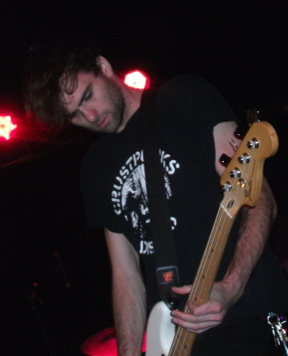
Cooper Žák of Lightweight at the Miners Foundry Cultural Center for the Summer Daze concert series.
I started writing a piece about the show we promoted so heavily last week...you remember, the Miners Foundry event with Sacramento's Secretions. I guess it was fine (the article), but it started getting into the future of events and didn't focus enough on the absolute success of the current event. With that in mind, I'll try again, with some bonus footage of each band.
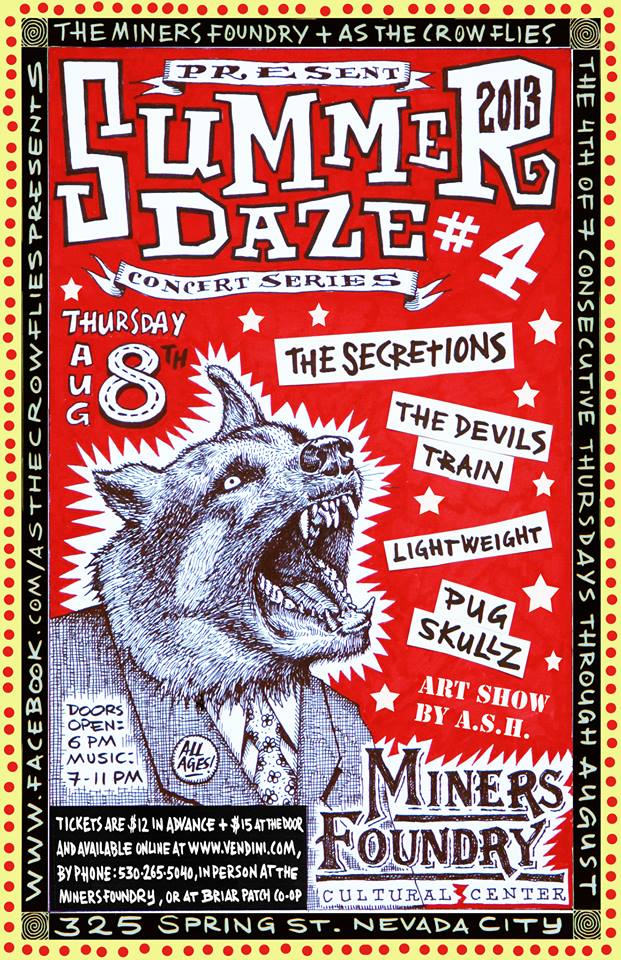
When I saw the first poster for the Summer Daze events I immediately knew I wanted (Pug Skullz) to be part of it. Olaf Jens, local artist and disc jockey, had created a captivating image with that first poster, and it boosted local interest. Each successive poster generated more enthusiasm and with a simple request to As the Crow Flies Presents promoter Chad Conner Crow, Pug Skullz was in!
 Sometimes I feel I over-promote, that I abuse my Facebook friendships by being a little too persistent in my attempts to get the message out about certain shows or music releases. If Facebook weren't so intent on hiding posts from friends and followers it might not be necessary to repost events, but as it stands, newsfeed posts disappear in a matter of hours without a diligent search. Point? I pushed this show in ways I hadn't before and felt a little guilty about it. How many of the attendees did my work bring in? I'll never know, but I'm certain I'll over-promote again.
By the time we got to playing there was a good sized crowd of kids and old punks dancing and having a great time. The venue staff was having a good time, the promoter was happy, the bands were relaxed and ready and the audience was really enjoying the venue's sound and lights. Yes, Scott Steuer did a great job with lights and my previous predictions about Greg Cameron's ability to do sound were greatly underestimated...I was completely blown away! I think our community is finally beginning to notice what we've got here.
Pug Skullz are fairly new and we don't mind opening for other bands. We play simple punk rock with a deeper message than most people care to hear. We make mistakes. We don't use pedals, effects or other sound enhancing technologies. We don't promote an image...for me, it's all about expression. It's difficult getting people to come see an unknown band, so opportunities to play with well respected, established artists like the Secretions are a gift. Aside from a couple of blown verses and a simultaneous loss of place in the music (by me), I think the show went well for Pug Skullz. We were followed by Santa Cruz's 'Lightweight'.
Lightweight pushed the speed levels up quite a few notches and were rewarded with a nice circle pit. It's really great seeing younger people playing full-tilt punk rock. There is still melody under all that speed and noise, so I 'liked' their Facebook page and bookmarked their releases on Bandcamp. They're doing some really cool things and are just gonna get better.
Next up was the Devils Train. Since moving north roughly 10 years ago, I don't believe I've watched another band perform as many times as I have this one. Surprisingly, they continue to improve. They play around town a lot, but since they played the Far West Punk Fest, I've been hearing how much Sacramento loves them. The evidence of this lies in the fact that Akasha, pin-up 'devil-girl'/vocalist extraordinaire, was able to convince The Secretions to come back to Nevada City after an unfortunate ten year absence. They have a very loyal local following because they put on an awesome stage show and play an interest blend of punk, jazz and ska. Plus, they're really nice people, so don't be afraid to approach them...they're not as dangerous as they appear.
Haha...I guess I did have some video of the 'masked paparazzi', aka Mike Meals, with the Secretions on "Viva La Lucha Libre"!
The Secretions are a bunch of great guys. I only got to spend a few minutes with Danny while he worked the merch table, but found him to be a very personable, enthusiastic and knowledgable guy. Once they took the stage his sense of humor ruled the evening. The crowd stuck around to the end, which is a huge testimony to the solid set they played. These guys impressed everyone with their originals and nailed their covers...Greg called their Descendents cover on the first chord. The Secretions are a great band and proved to be just the anchor punk needed to regain a foothold in Nevada City.
In the end, there were more people than I've personally seen at a punk show in Nevada City...and that's with the higher than normal ticket price. Because of this show, I see a future for punk rock in Nevada City and Grass Valley...and so do bands from around the area. I'm already getting e-mails and Facebook messages from a wide range of punk acts requesting gigs. If your band is interested in playing this area, 'like' us on Facebook/PunkRetro or Facebook/PugSkullz or e-mail me at doug at punkretrospective.com.
Stolen archival interview: Greg Cameron
Fred Hammer brings us: Greg Cameron
Stolen directly from: http://doublecrossxx.com/archives-3/archives-more-older-posts-41/
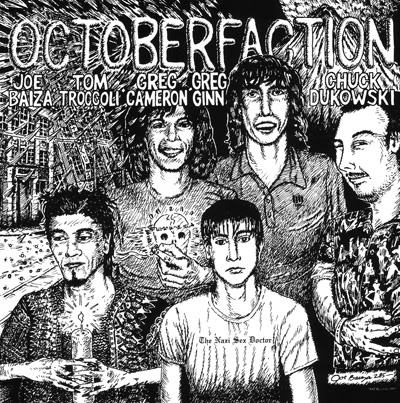 Nardcore authority and It’s Alive Fanzine editor, Fred Hammer, brings us a great interview with long time punk drummer, Greg Cameron. If stories about the Descendents and Black Flag are your thing (which I sure hope they are), this is a damn good read. -Tim DCXX
Can you tell us all the bands you have played in, what type of drums you learned on, what you are playing with now, and what was the 1st punk band you ever saw live?
The bands I’ve played in are (in order): Bulimia Banquet, October Faction, SWA, Chemical People, Punk Rock Vatos, Jeff Dahl, Marc Spitz Freestyle, Cüddle, and the Nip Drivers. Very technically speaking, I was in the Descendents at age 15 for about 2 weeks. But I wasn’t really up to snuff then and the band was pretty much finished for that time when Bill Stevenson left to join Black Flag.
There were attempts to form bands with various other people. Notably, I tried several times to form bands with Tony Lombardo and Ray Cooper from the Descendents over the years, but nothing ever came of it. I also jammed with Greg Ginn for about year after Black Flag & Gone broke up, but he wanted to head in a different direction and we parted ways. London May, ex-drummer of Samhain, had a band project called “Carbonation” which never came to fruition. He wrote and played guitar, his girlfriend Carrie Hale did vocals and Larry Schemel (Patty Schemel’s from Hole’s brother) played bass. It was actually promising material and Carrie was a great singer. But there was some internal conflict and it didn’t work out. I’m sure there’s a few other attempts at bands that I’m forgetting…
I’m currently playing on DW drums. It’s a 4 piece kit with a 24″ kick, 14″ rack tom, and an 18″ floor tom. I purchased the kit shortly before joining up with Jeff Dahl on a tour back in the late 90s. For cymbals, I’m using a mix of Zildjian A series and Paiste 2002 Rude series. Four crash cymbals consisting of 18″ Zildjian Rock crash, 19″ Paiste Rude Crash/Ride, 20″ Zildjian Ping Ride (yeah I use it for a crash), and another 19″ or 20″ Rude Crash/Ride. Hi Hats are Zildjian 15″ Rock. I need heavy cymbals because my sticks are as big as they make them, 3S’s. I usuallyuse Pro Drum’s house brand or Vic Firth. I used to play with Pro Mark DC-17′sbut they became hard to get. My hardware is all Tama Titan, their stuff is by far the most robust of any hardware I’ve used and I have yet to find something better. My pedal is a Tama Iron Cobra. Once again, very heavy duty and great action.
My kit prior to the DW’s were Tama Imperial Star custom sized with a 26″ kick, 16″ rack tom, and a 20″ floor tom. I had the same set up of stands and cymbals. This was to match the kit I played on most often and did a lot of my learning. That was a Slingerland kit of the same dimensions owned by Bill Stevenson. That was his main kit with the Descendents and Black Flag. I practiced at both bands’ practice rooms for some time. The other kit I really learned on was Bill’s small drums that were at the Decendent’s pratice room in Lomita, CA. It was a small Slingerland kit with a 22″ kick, 13″ rack tom, and 16″ floor tom. When Bill joined Black Flag in ’83, he let me take the kit to practice on my own. He took the 13″ rack tom with him, so I purchased a 14″ Slingerland tom to replace it. I took those drums on tour with me for the SST’s “The Tour” with my band SWA. The Tama kit went out on the Black Flag ’85 “Slip it In” tour with SWA and that was my main kit for a long time.
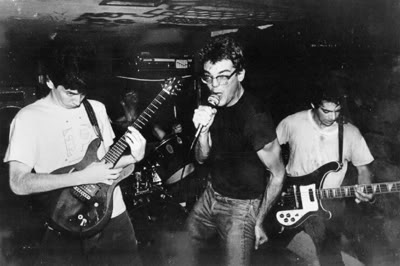
The Descendents
As far the first punk shows I went to, I believe it was the Ramones in 1981 at the Hollywood Palladium. Great show. That was followed up by the Dickies at “The Barn” at Alpine Village. Then shortly after that, a big BYO show at the Palladium headlined by TSOL with Adolescents, Seven Seconds, Wasted Youth, and a couple of other bands. I saw a drunk punker couple fall off the balcony that night right in front of me and my best friend from high school – Ray Cooper. He later went on to play in the Descendents and SWA for a bit. Then I saw the Descendents at a Circle Jerks show at Alpine Village. It was a life changing show for me in terms of my drumming direction. I’d never seen anyone hit as hard or play as fast and tight as Bill Stevenson. He was maniacal and amazing. That got my attention. My next gig was the Descendents and China White at Dancing Waters in San Pedro. It was a low key gig, but it was early Descendents at their prime. Frank Navetta (RIP Frank) came out wearing pajamas and a beanie. He played his guitar so hard that his pajama pants fell down around his ankles during a song called “Russianage”. It was an unforgettable show for me and theDescendents became my favorite band of all time.
How long did you know Greg Ginn and the SST crew before you joined OCTOBER FACTION and can you give us a little history on the band OCTOBER FACTION? You told me you were the opening act for Black Flag on two tours. Let us know some great tour stories please.
I had met Greg and company through Bill Stevenson, who I had met through Ray Cooper. Ray and Bill went to El Camino college together. They were introduced by a mutual high school friend of myself and Ray,Christian Matjias. Christian had been asked to manage the Descendents by Billbut it never happened. Bill had asked Ray to sing for the Descendents when Milo went to college. Milo wound up sticking around a bit longer and Rayswitched to guitar. He actually only did 2 gigs on vocals before moving to guitar. Bill left the Descendents shortly after that to Join Black Flag full time.
Since I had become friends with Bill as well as being one of his biggest fans, I started going to Black Flag practices and and tagging along to shows. I had tried to fill in with the Descendents for Bill, but I was only 15 at the time and my chops weren’t solid. I had only been playing a year at that point. Frank & Tony were upset with Bill. Frank left the band. So Tony, Ray and I jammed for several months. But I could tell Tony was disenchanted with my novice playing. I showed up to practice one evening after not getting a call that we were jammingand they were trying out another drummer. Needless to sayI was very bummed. I got ahold of Bill on the road with Flag and asked if I could take his practice kit so I could jam alone at my grandmother’s house. He give me the thumbs up. For about a year I practiced almost every day by myself. My playing improved considerably. I was motivated by the “I’ll show you” type of anger from being betrayed by my friends including my best friend.
During that time, Black Flag had been engrossed in a lawsuit with Unicorn/MCA records. They were flat broke, living in their offices at SST. All of Bill’s drum hardware and cymbals had been broken or stolen out their practice pad in Long Beach. They moved to a new place in Redondo Beach to both practice and run the booking. Bill asked if I could bring over my nice new shiny hardware and cymbals which I had acquired while they were touring so he could borrow it for practice. In exchange, I would be able to practice there when Flag wasn’t. That is how I met up with everyone in the SST crew.
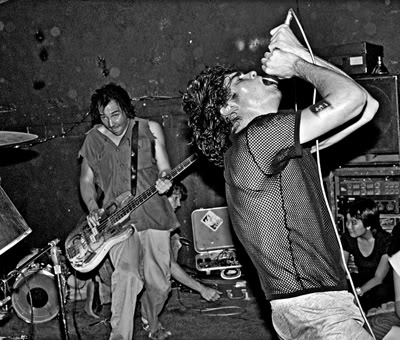
Black Flag with Chuck Dukowski
How I got to playing in SST bands is because of Chuck Dukowski.Chuck had left BlackFlag and Kira Rosseler had replaced him. He had gone to Germany for a while to visit family. When he returned, he still worked at SST booking Flag tours. He was still doing some writing for Black Flag as well and still had an ownership stake in the label. He also reformed his old band Würm. He would hear me jamming by myself downstairs from his desk and started bringing his bass to jam with me. Those were some fun angry jams. One day he was on the phone chastising one of the Würm members for being flaky about pratice and life in general. He said that he was tired of dragging them along and decided he would jam with his new “young and excited” friend instead. So we jammed just about every day.
He wanted to start a band that would be SWA. We tried out various guitar players including Ted Falconi from Flipper. It didn’t work out with Ted, but he was a great guy. By that time the ’84 Black Flag tour was ramping up. Chuck really wanted to hit the road, so he came up with the concept of October Faction and got Greg Ginn onboard. It would be a freeform jam band with myself, Greg, Chuck, and Joe Baiza from Saccharin Trust. So that’s what we did, we opened the ’84 Black Flag tour with a 30 minute set of freeform jamming. People either loved it or hated it. There was no middle ground, haha.
Our first show was at the Metro in Chicago. It was my first time ever playing in front of a real crowd. It was quiet the high for me. That was actually the only tour the “Faction” did, and we played a few sporadic shows around L.A. when the tour was over. Tom Troccoli joined us on the second night for vocals and became a permanent member of the band since he had a lot of energy and was really into it. He had come on the road as a crew member, but then became a band member too. There weren’t really clearly defined roles in those days. Everyone in a band was a roadie, and some of the roadies were in bands. We didn’t discriminate.
We recorded two albums. The first was at the Stone in San Francisco. It was a week after the end of the ’84 Black Flag tour. Bill and Kira had contracted a really virulent stomach flu. The day before the show, I contracted it and became bed ridden for the next several days which meant I missed the show. Chuck didn’t want to miss the gig or the recording that was to take place, so he enlisted Bill to fill in for me. Chuck didn’t tell me about that and I was a bit upsetat the time. But it was a last minute decision and everything was in place. So it was the right thing to do.
The second album was recorded at Mystic Records in Hollywood which was a run down studio with very old gear. It was apparently the place that Led Zepplin recorded the song “Whole Lotta Love” which is some neat history. It’s now the DMV building at the corner of Gower and Vine St.
As far as tour stories go, I’d say my first gig playing live in front of a large crowd was quite a high. The was the one at the Metro in Chicago with October Faction on the ’84 Black Flag tour. The venue was packed, and they had recently acquired a chunk of AC/DC’s tour PA system which was very powerful for the time. We got up there and jammed our asses off. The PA had so much punch that piece of the ceiling started to fall onto the stage when I hit the kick drum. It just made me play even harder and the crowd really fed into it. Even though our music isn’t the average crowd’s cup of tea, most of them seemed to be really into it and it made for a killer debut performance for both myself and the band.
Another one of my favorites is the time in 1985 when I was drumming with SWA. We had a caravan of vehicles for the tour, three vans and a large Ryder truck. We stopped off at a 7-11 as we were leaving Walla Walla, WA on our way to Portland. One of the problems when traveling in caravans with members of band and crew shifting to different vehicles is keeping track of people when making food and gas stops. A couple of hours after taking off from the stop, we realized we had left Merrill Ward, our singer, back at the 7-11. Back then there were no cell phones so there was no way to communicate with Merrill. We had to finish the trip and try to figure it out from there. When we got to the venue, Merrill had been trying frantically to get ahold of us. He was extremely upset to say the least. He was able to get on a plane from Walla Walla and get to Portland just in the nick of time for the show. He was so angry he didn’t want to talk to any of us. But that anger made for one of the best shows of the tour. He put on such a high energy fun show that it really got the crowd going. It was really our night as Flag couldn’t match the energy of our set that night. It also cheered Merrill up quite a bit as I recall. How could he stay mad after such a killer show? He got all the groupie attention that night which detracted from the attention of another particular lead singer of the headlining act.
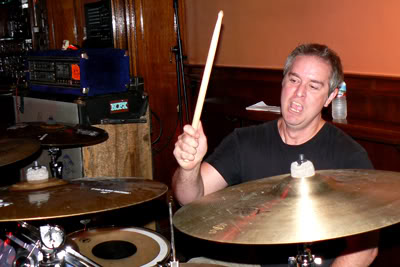
Greg Cameron, Photo: Fred Hammer
How many shows/tours did you play with OCTOBER FACTION and can you go into detail about playing with other SST bands? Was it as crazy as everyone says it was?I sawOCTOBER FACTION afewtimes and I remember people being very hostile because you were not playing traditional Punk/Hardcore music.
October Faction was a one trick pony for tours. The band was put together for the purpose of opening up just the one tour and wasn’t necessarily meant to be around for a long time. After that tour, we did play a bunch of gigs around L.A. though to mixed reactions. In all truth, it was a totally self-indulgent quagmire of noise. How could it not be? It was comprised of two lead guitars of eclectic style along with lead bass of eclectic style. And we were really fucking loud. It was bound to be turn-off to all but the most diehard Ginn/Dukowski/Baiza fans. I was there to try and hold it all together as they jammed insanely, going off on their own tangents. The addition of Tom Troccoli on vocals also helped keep things more cohesive as he formed lyrics. It helped reign in the jams so that there was more structure and some songs actually started to form. The difference is apparent on the two October Faction albums from the first to the second.
Playing in SWA was a lot different than October Faction. We had real songs, it was rock and roll, and it was hard. But there was still some hostility towards us mainly due to our singer, Merrill. He had a flamboyant style along the lines of Iggy and Bowie which turned off a lot of people that didn’t appreciate that style or were simply unfamiliar with that style. It’s ironic because punk in general was rooted a lot in that style ala New York Dolls and the aforementioned artists. But many of the SST fans weren’t hip to it. I think that anyone who might have been in doubt of Merrill’s rock abilities needed to check out his vocals on “Triumph of the Will”, Overkill’s one and only album on SST records. Those are some great vocals. If you never saw Merrill in person but heard that record, you’d think he was as hard as they come. He’d wear pink tights on stage with Overkill which also didn’t go over too well. But those guys rocked!
SWA did a few of tours, one with Black Flag in 1985 and also SST’s “The Tour” which was a small west cost tour featuring us, Meat Puppets, Minutemen, Saccharin Trust, and Hüsker Dü. That was a really fun tour and being an opener, we and Saccharin knew our place and had our egos in check. However, every night was a debate with the other three bands about who was going to close the show. At that point they were all hot on the college circuit and allwanted to headline. It wasn’t a big fight or anything, but there was a bit of ego throwing and rivalry. It was still a lot of fun and theatmosphere was very family like. I would say that those days were the highlight of the SST days. The bands were all friends, we did a lot of shows together, and it was a family. We all looked forward tothe releases of each other’s albums. Of the bands that livedinL.A., we’d get together once in while for impromptu jams and such. It was a good environment and they were mysecond family.
I know you were involved with the Black Flag reunion. Can you tell us what involvement you had in it. I believe you did the sound for the show.
Yes, I was involved doing sound for the “Benefit for Cats” Flag “reunion”, if you want to call it that. Many of the key players were not invited to participate though I know they wanted to. I wound up mixing sound for the show both nights which didn’t go all that well, mainly the first night. I had wanted to be at the practices for the shows so I’d have an opportunity to mix at the practices so I knew what to expect.
I didn’t get the call to do it until the night before the first show. I showed up to do the mix. A few issues made the sound the first night pretty bad. The first is that the Hollywood Palladium is a difficult room to mix in due to it’s shape. There are various reflections and hot and null spots that make it tricky. It was designed to be a big band ballroom and the acoustics don’t lend themselves very well to rock music. Then there was an issue with the PA where it needed some more tuning to get rid of some muddiness in the low end. That issue was corrected the second night. The third issue was Ginn’s guitar stack. It was pointed right at mix position so literally all I could hear was his guitar even when it was all the way off in the mix. It made it very hard to get a good balance in the PA as I had to constantly walk out from behind the board and listen to make adjustments. So all in all, it wasn’t the best mix I had ever done. I got complaints along with some thumbs up. But I’ll be the first one to admit it could have been a lot better.
Can you tell us about the most violent show you ever saw in Southern CA?
The first BYO gig I went to at the Hollywood Palladium was one of the most violent. Beside the couple that fell of the balcony, that gig got off to a rough start. I can remember waiting in line to get tickets. They were moving very slowly which started to piss of the more agro fans. They started breaking lighting fixtures on the outside of the building with rocks and bottles. Then they smashed the box office window. That really slowed things down trying to get it. They thenopened up another box office and everyone gottheir tickets. Then the door opened. It was a mad rush. People were charging in yelling and screaming. I was 14 at the time and had longish hair which made me a target for the skin heads. Ray Cooper, my best friend from high school who had driven us to the gig, had relatively short hair and was likely safe. But he was also intimidated by the skins. So we made a dash for the upper level and found a nice dark spot where we wouldn’t be harassed.
As we sat there with people still rolling in the doors, a few skinheads up the balcony grabbed chairs and phone books and threw them into the chandeliers. They broke apart and hit the floor. Fortunately nobody was standing below. That would have been pretty ugly.
Then just before the first band went on, a guy with long hair up by the stage was approached by some skinheads who grabbed him by the hair from behind and threw him to the ground. They starting beating the crap out of him until he was bloody and busted up. It reinforced my desire to stay hidden in the balcony. Then the bands started. They were kickingsome ass and theenergy in the mosh pit was high. Lots of people were getting hurt. Lots of fights were starting. I remember people climbing the PA stacks and swinging from the curtains on the sides of the stage. It was wild. It was scary.
TSOL closed the show. It was during their set that a drunk skinhead dude pickup up his drunk girlfriend and held her over the balcony to scare her. He lost his footing and they both went over and hit the floor below. That’s when Ray and I decided it was time to leave.
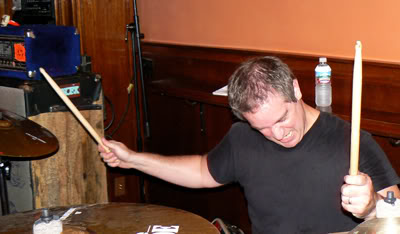
Greg Cameron destroying the drums, Photo: Fred Hammer
I know you have been involved with sound recordings for a long time. Can you tell us exactly what you do and what advice would you give to a new band recording? What are the most common mistakes you see bands doing when they record or even what mistakes bands make when they play live?
My advice to any new band recording is to practice, practice practice. And have your instruments in good working order. Studio time is expensive. If you don’t have your shit together when you walk in, it’s going to cost you time, money, and piss people off. It will aggravate whoever is producing and/or engineering. The same goes for live performance. Practice and have your gear in working order. Nobody wants to see a band that’s really sloppy and acts like they don’t care unless that’s what the act is really supposed to be about. Even then, there’s a certain order to things.
One of my biggest pet peeves with new bands, and even some old ones, is how they get their gear on and off stage. Drummers: do NOT set up your drums on stage. Set them up when you get to the gig or at least well before your band has to be on stage. It slows down the band change over process immensely. You get in everybody’s way. You cause problems. You are rude. And when you’re done, get your shit off stage right away and do NOT break your drums down on the stage. Break it down OFF the stage as you cause the same problems stated previously.
Guitar & bass players should have their instruments tuned just before it’s time to get their gear on stage so they’re ready to plug in and go. Tuning on stage slows everything down. Really nobody wants to see you tune your guitar & it kills momentum for your band. And get your amps off stage right after playing. Don’t go grab a beer and chit chat. Once again it slows everything down and screws the next band in line. The gig is not about you. It’s disrespectful to the next band, the fans, and the club. It does little to further your reputation with your peers and makes it less likely that you’ll be asked back to play again.
Bottom line, treat your set up and tear-down as you would want the band before you to treat it. Egos be damned. If you get on late, cut your set short. Don’t screw the other bands down stream. Be the “bigger” band and do the right thing. It will be better for you later down the road.
I can remember a Black Flag show in 1984 at the Ritz in NYC. It was the “New Music Seminar” where new bands get to showcase themselves for “industry” people. It was Sisters of Mercy, General Public, and Black Flag. Talk about an interesting mix eh? It was the first time I had seen the Sisters of Mercy and GP. Sisters of Mercy were a bit boring as they were just getting going then. General Public was also just starting out. I was a fan of the English Beat, but this band just didn’t do it for me.
But what really put them on my shit list was the fact that they played almost a half hour longer than they were supposed to which cut right into Flag’s set time. Then they leftthe stage and nobody fromthe band or crew came to get move their gear. It was a big snub. So Greg Ginn grabbed me and we headed up to the stage. Ginn was so pissed that he started breaking the guitar cords off in the amps by dragging them with the cords and then shoving them over on the side of the stage. Guitars, drums, and stands were literally thrown across the stage. It was the most pissed I’d ever seen Greg. Then we got Flag’s gear up fast and they started playingangry. It was a good gig.
Last question…Feel free to say anything you’d like.
I’d just like to say thanks to the SST crew over the years and in particular Ray Cooper for introducing me to “punk rock”, Bill Stevenson for being a good friend and mentor, Chuck Dukowski for being a generous friend and mentor, and Greg Ginn for starting SST which made a large part of my life possible. And thanks to Mr. Fred Hammer for asking!

SWA promo shot (not included in the original article)
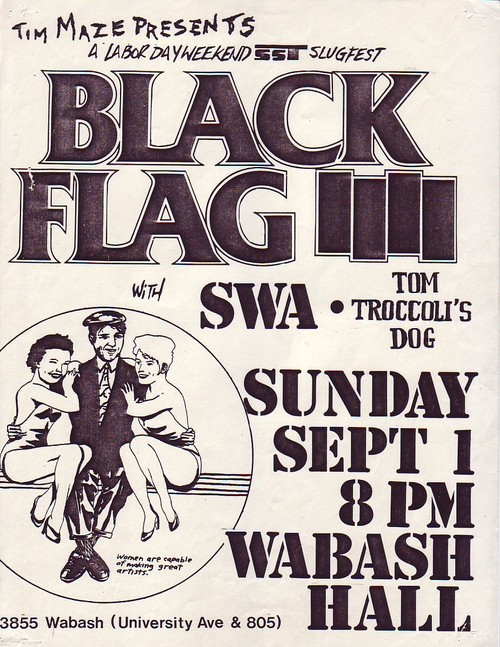
Black Flag/ SWA/ Tom Troccoli's Dog at Wabash Hall
Punk Returns to the Miner’s Foundry | Nevada City, Ca | 8/8/13
It's the beginning of August, which is the hot, dry part of summer up here in the foothills of northern California. There are nights the temperature can stay up in the 80 degree range, enough to make the “Summer Daze” concert series moniker predictive rather than just descriptive. This Thursday, August 8th, at the Miner's Foundry Cultural Center, marks performance number 4 in a series of 7, “the heart of the series: punk rock!,” as promoter Chad Connor Crow said in a telephone interview this afternoon.
He's more of a metal head than a punk, he claims, but says he had a friend, back in the day, who used to school him on punk rock through their weekly meetings. He has a serious love of Henry-era Black Flag and had some really nice, profound things to say about punk as a genre.
“I know the word 'organic' is overused to the point of becoming foul, but punk, at its core, is the most organic, most real music ever. This is what adrenaline sounds like...this is how we speak our truth,” he said, adding,”This should be the most rowdy show of the series, and not just because it's the only one that has whiskey available.”
He says the series, produced by his company, 'As The Crow Flies Presents,' has had a fair turnout and that the people who are showing up are blown away by the talent they're witnessing. “This is all about love and support of the bands,” he said, “and it's been a real grassroots effort, it's a real community driven event. The whole point is to turn people on to something they didn't know they would like.”
I had to ask him about the posters for these events, because they're so eye-catching. The entire series of promotional flyers is being hand-drawn by local artist, Olaf Jens, who may be better known to the community as KVMR's, “Vinyl Avenger”. Chad told me he and Olaf have become good friends over the last few years and that he'd given “full artistic freedom” over the design work to Olaf. How successful are the posters? Well, Chad informed me he's been replacing them, several times, all around town, as people are “taking them home to put on their refrigerators.”
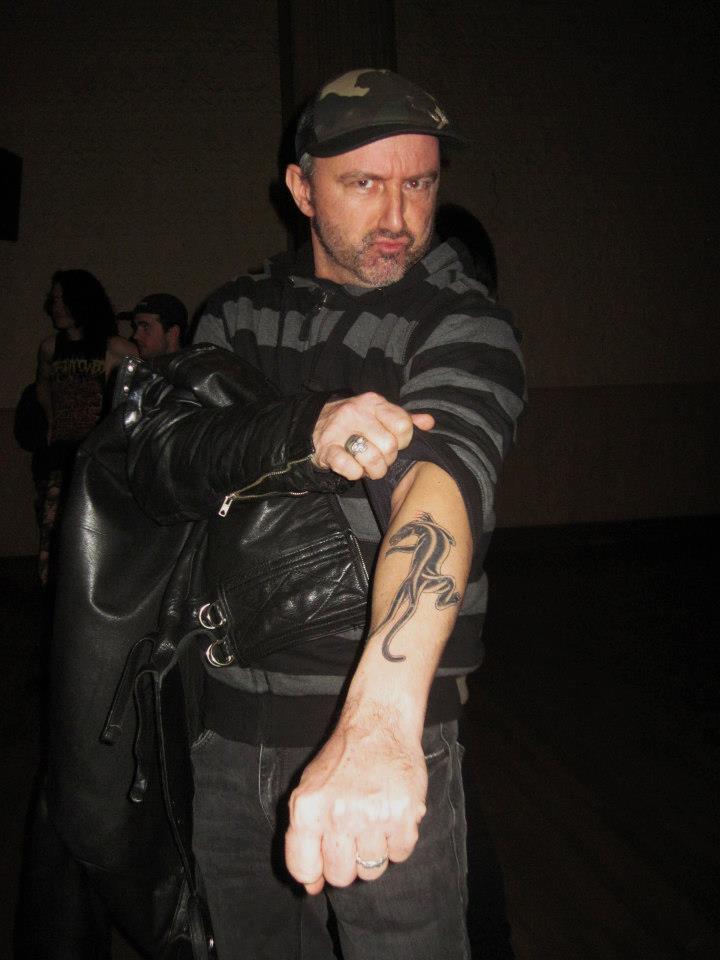
Olaf Jens
Photo credit Mike Meals
This isn't the first series he's produced, but the rapid return of a week to week concert series sounds a bit overwhelming. I'm always impressed by people who take on massive undertakings like this and succeed. To Chad, success is making sure when people see 'As The Crow Flies Presents” on a flyer they'll “know it kicks ass!”
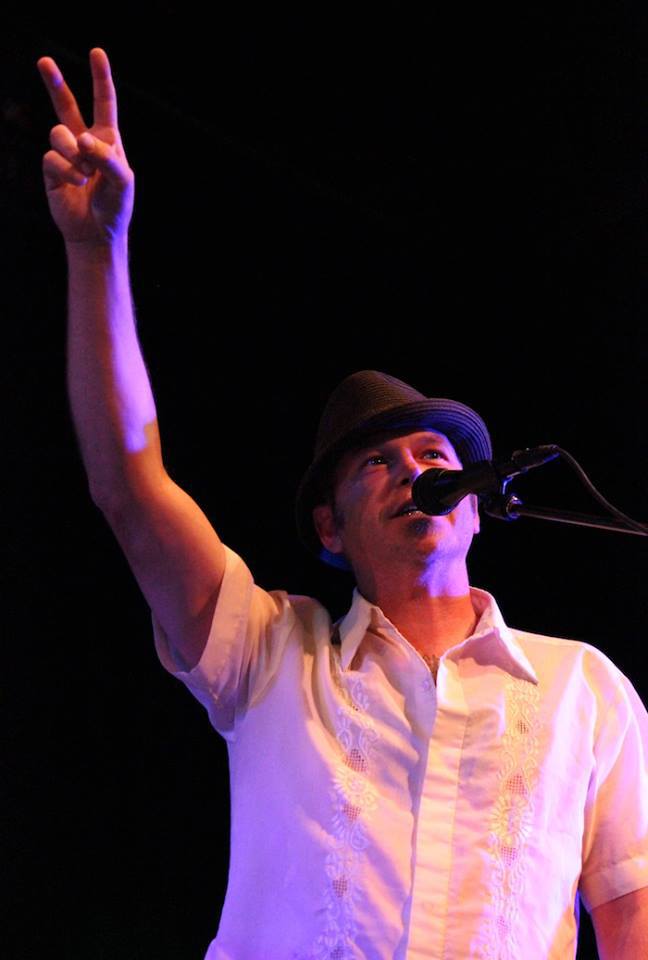
Chad Connor Crow
Photo credit Chula Gemignani
He said the bands are excited by the opportunity to play such a great venue. “It feels like an arena, the lights, the sound...very professional.”
Speaking of which, I also spoke with Greg Cameron, of Cameron Pro Audio, the man in charge of sound at the venue. His knowledge of punk rock and his story, which I'll include some of below, are matched only by his expertise in venue sound. He's the go-to sound-pro for The Miner's Foundry Cultural Center in Nevada City. Here's a little Q&A:
ElDorkoPunkRetro: As the Crow Flies Presents has already put you to work on three of these...your impression so far?
Greg Cameron: Each of the nights has had a different theme which keeps things interesting. So far it's been a great opportunity for both newer and established performers to strut their stuff on a bigger stage with a good sound system and lighting.
ElDorkoPunkRetro: Because you and I have become somewhat acquainted, I'm a little familiar with your story...I'm always curious how people end up where they do. What's the connection between the Greg Cameron who appears in FILMAGE: The Story of DESCENDENTS/ALL and the Greg Cameron who posts tech jargon, which I can't begin to understand, with other tech nerds when discussing large venue sound systems?
Greg Cameron: I've always been a tech nerd since I could walk and talk. Even back in grade school as far back as the 3rd grade, I was able to thread up the movies in school on the 16mm projectors. And I figured out how to run sound and lights in the school auditorium. When I became involved with Black Flag, jamming in their practice space, I was the one figuring out how to fix broken guitar amps and figuring out how to keep the practice PA up and running.
I'd replace blown speakers, solder bad cords, replace tubes in the amps, etc. My big introduction to live sound was on the '85 Black Flag "Loose Nut" tour when Black Flag took Rat Sound Systems with them on the road. My band SWA was on one leg of the tour. It was the second time out for Rat Sound on a tour and their second with Black Flag. They (Dave Rat and Brian Rat, it was a 2 person company back then) had built a new system for the tour from scratch. As a punk rock tour, the band members were also roadies. So we were all loading the PA in and out of clubs every night. Me, being the tech head that I was, had to learn everything about the system and rock band PA. So I nagged Dave Rat a lot and picked his brain. And I still do quite a bit.
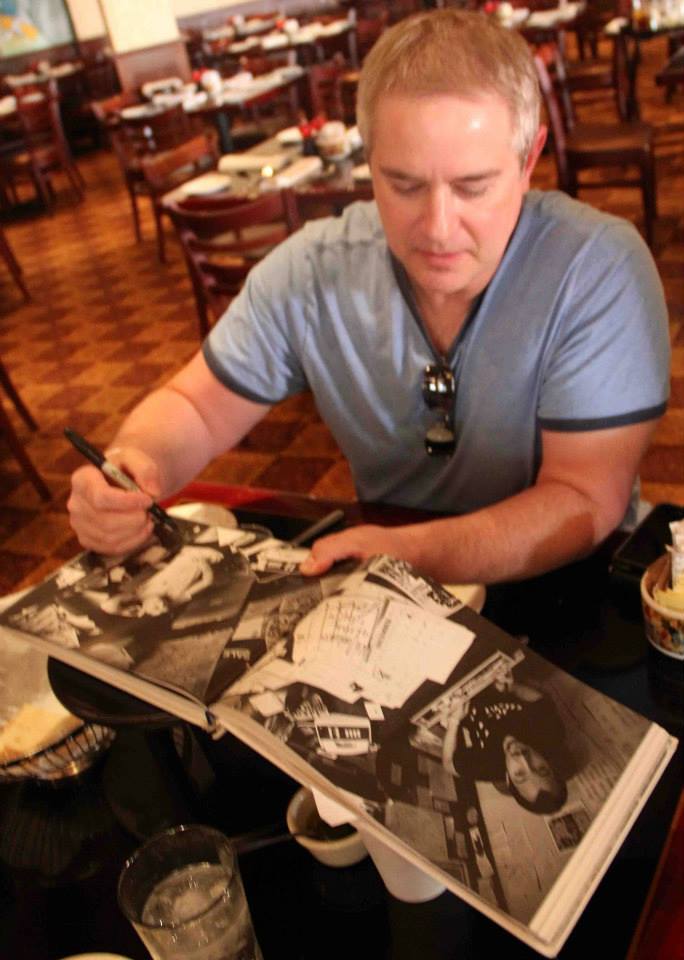
Greg Cameron
Photo credit Jordan Schwartz
At the end of that tour, I needed a job upon our return to LA and Dave hired me for a while for one-off shows in LA at places like Fenders Ballroom and such. I learned a lot more. But they couldn't keep me on for very long as there had been a couple of robberies of gear and money was tight. They were living in their shop as it was to keep expenses down so they could continue to grow the company. But the love of live sound PA never left me. After about 15 years, I decided I wanted to start doing PA stuff again and started buying gear and building stuff. I also got back in touch with the Rats who had grown to be one of the most recognized PA companies in the world doing the tour sound for the Chili Peppers, Pearl Jam, Rage, Coachella festival, and tons of other bands and events. I still had a lot to learn and a lot to get back to up to speed on. I'm a PA junky, so I learn stuff and it sticks. I'm still a drum junky, though.
ElDorkoPunkRetro: I've heard whisperings of some ancient appearance by the Dead Kennedys...even M.D.C. Is it true punk bands used to appear at the Miner's Foundry?
Greg Cameron: I have limited knowledge of the punk history of the Foundry, but I've been told by people that were there back then DK had played there as well as the Decendents and lots of other punk bands as part of their tours.
ElDorkoPunkRetro: Over the past couple of years there seems to have been a resurgence in punk rock. This whole area, from Reno to Chico, San Francisco to Sacramento, is teeming with great bands in the genre. Heck, even our little town has a few punks left. What do you see as the lasting contribution of punk to music, art, and expression? Do you see a future for punk?
Greg Cameron: I think "punk" has been hugely influential on current music and will last purely by the virtue that established bands now which were heavily influenced by it will in turn influence bands for generations. Just like African tribal music influenced Europeans to form modern 4/4 time signature music. That of course was the roots of blues which gave way to rock and punk rock. It just keeps on going. As far as art, much of the punk scene where I came from in LA was part of the art community. It's all intertwined. Even hard music is art.
ElDorkoPunkRetro: The Secretions are a fairly successful band and The Devils Train are building a good following. This punk version of 'Summer Daze' looks like it should be worth going to. Do you think we'll be seeing more punk at the Miner's Foundry? Any chance some of your old pals might pop into town?
Greg Cameron: I would certainly like to see more music with an edge at the Foundry. And I think some of my friends will come to play once in a while. I have a personal commitment from the members of FLAG (one of the two current incarnations of Black Flag) that they will play at the Foundry early next year. They were potentially going to come this month but we were a bit too far north for them to make it back to FYF in L.A. the next day without too much stress. I've been nagging the Descendents to come play for a couple of years now. It's difficult for them because Milo, their singer, is also an actual scientist and can only get away from home for a limited number of days per year. I just got word that FILMAGE will be screening at the Nevada City Film Festival next month. I pitched it to the band as a good opportunity to come and play. It's a long shot, but I figured it wouldn't hurt to ask.
ElDorkoPunkRetro: Final thoughts?
Greg Cameron: I would like to see better attendance at the rock shows at the Foundry. I realize with the myriad of events in this small town and the lack of money in the pockets of younger folks, it's tough to pack shows for younger audiences. Bringing in bigger names from the outside could certainly bring more people to the shows and help get more exposure for the local bands. I'd really like to see that happen.
So, there you have it folks...possible visits to the Miner's Foundry by FLAG and Descendents soon! In the mean time, check out the music of these four bands who will be appearing there this Thursday night. Pick up early bird discount tickets at the BriarPatch Co-op or through the Miner's Foundry website. $12 advance/ $15 at the door.
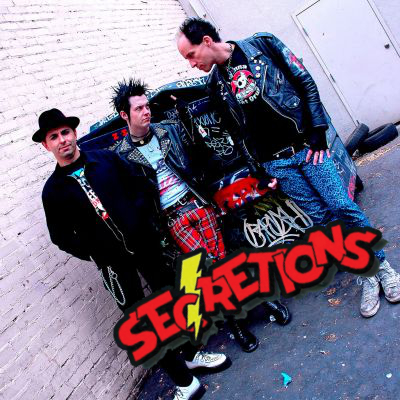
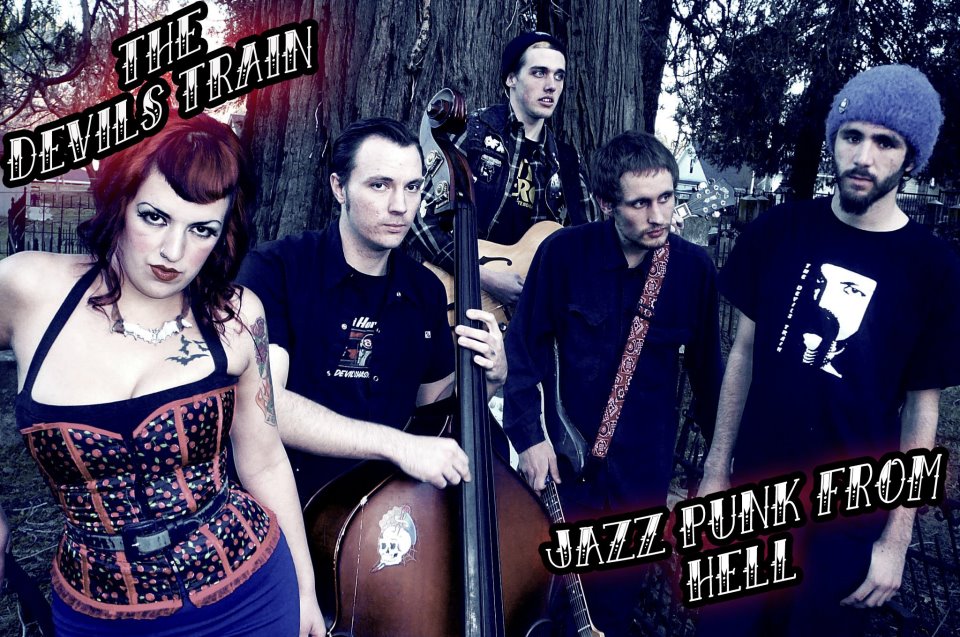
Photo credit Ace Dans
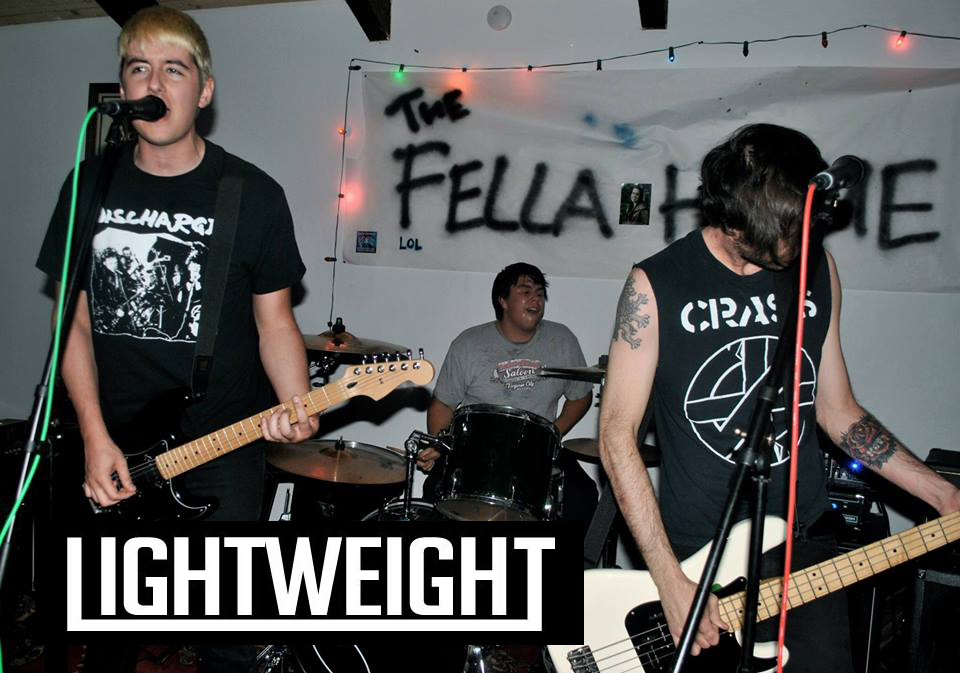
Photo credit Kef Photography

Photo credit Ellie Gaylord
Strange Party – Radio(in)active EP Release & Show
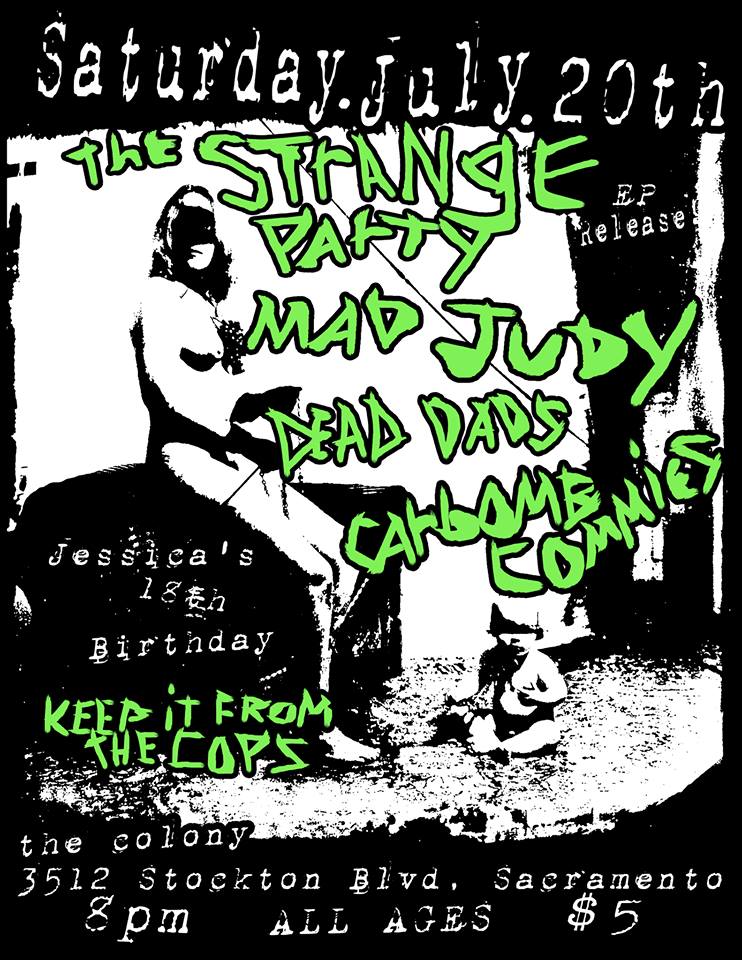 A mysterious message appeared in my Facebook inbox the other day...a secret Bandcamp link to an unreleased four-song EP. I clicked through and got to hear the new 'Strange Party,' Radio(in)active EP a full week in advance of it's release on 7/20/2013.
I have seen these guys perform, so I had an idea what to expect. Anyone who read my column on the Sacramento horror-punk scene will remember the respect 'The Left Hand's' singer, Vic, holds for 'The Strange Party' and that both bands were to open for former 'Misfit' Michale Graves. That show was a huge success.
The horror-punk genre is typically characterized by power vocals and a quick tempo married to simple, catchy melodic structures. The punk-edge of the guitar sharpened by the skilled mastery of a metal-head axe wielder. The Strange Party does not disappoint. Their talent and skill are presented here in some nice, clean recordings.
While similar to their 'Waste of Flesh' EP, 'Radio(in)active has it's own character and strength. Sadly, I will not be sharing the secret link with you at this point...you will have to wait for the band's show at The Colony tomorrow night with Dead Dads, Mad Judy, Carbomb Commies and Keep It From the Cops. Event link: https://www.facebook.com/events/189659817853946/
Teaser track:
Recovered Files: Bows and Arrows Collective 2/2/2013
 It's tough to keep things like this blog going without a really reliable stream of income. The winter months destroy us financially, as I do a lot of seasonal building/painting type work. What's that have to do with anything? Well, if I can't keep my truck running or afford new blades for my circular saw, I certainly can't afford a better camera or a computer that isn't on the verge of dying.
Lucky for me, I have a decent knowledge of technology. I've been running computers since the mid 1980's and I'm familiar with pretty much every operating system IBM/Microsoft or Apple has come out with. You still don't care...what am I rambling on and on about?
Toward the beginning of this year, with my Mac G5 Power PC becoming quickly and unusably obsolete, I acquired a used HP laptop. After installing Windows 7 Home Premium on it, I started moving all of my music over to it. Gigabytes and gigabytes of glorious punk rock! I then dumped my SD cards full of recent shows and my pocket recorder full of song ideas, concerts, etc. Things were going really well...I finally felt somewhat organized.
Then the HP fizzled, fried and failed. Goodbye everything I failed to actually back up.
The videos below partially represent what was saved from the February 2, 2013 show at the Bows and Arrows Collective. I say partially because I actually do have the rest of the Charles Albright gig, but they're already well represented on our YouTube page. Sadly, I think the Four Eyes footage is gone. I will save this hard drive for most of what remains of my life hoping to one day retrieve that data...but, realistically, it's forever gone.
It was a really great show. Most shows at Bows are. This was my first time seeing the Four Eyes and Scouse Gits, second time seeing Charles Albright, as well as Boats!. Had a really great grilled cheese from the kitchen...crazy good!
I think I'm just going to drop the videos in here and not do too much more commentary...I've got more uploads to take care of before this pile of crap crashes.
I've been meaning to get Boats! on here since they played Reno with Youth Brigade and Adolescents two years ago...hooky punk and humor!
The Scouse Gits were a huge surprise. Trashy garage rock fun!
As always, Charles Albright rules!!
Horror Night in Sacramento
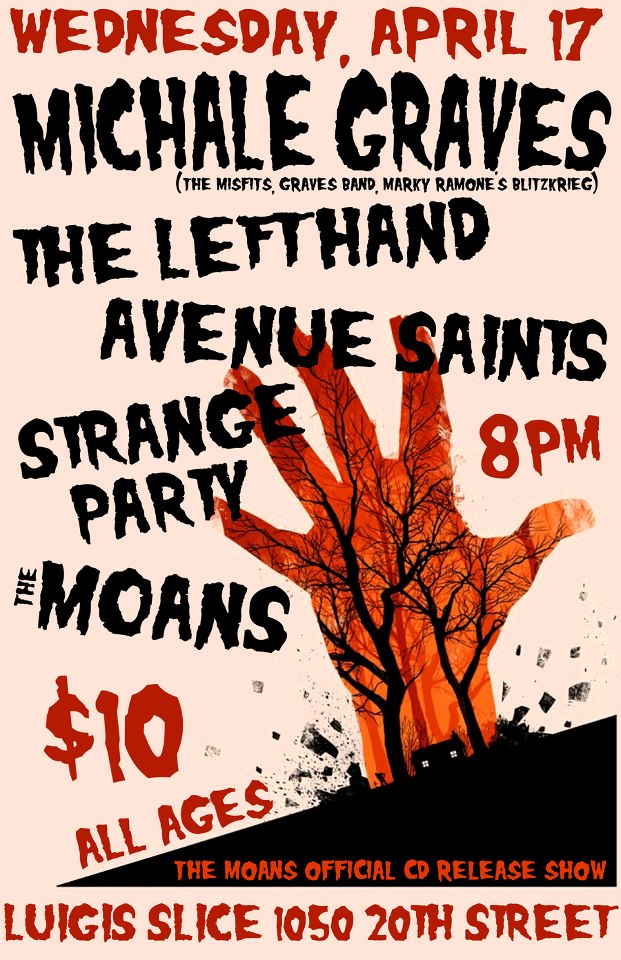
World-class horror punk in Sacramento Wednesday!!
Event page on Facebook
From the subculture rich environs of punk rock has emerged a dark, sometimes campy, variant. Werewolves, vampires, evil doctors, friendly psychopaths and amorous murderers infest songs of love, yearning and other terrors. True, elements of horror have been with punk since the dark beginnings, but horror punk has become a popular, well-defined sub-genre of the greater punk movement.
Early 'horror' acts include the Cramps, Bauhaus, 45 Grave and Alien Sex Fiend, but the most influential of all remains the Misfits. The headliner for tomorrow night's show at Luigi's in Sacramento, Michale Graves, helped redefine the boundaries of horror punk, giving expanded legitimacy to the genre through his strong songwriting and vocal work with the latter-day Misfits.
Songs in the genre can be humorous or dead serious, and there has always been a persistent melodious nature to a large percentage of them. They're catchy, contagious even, and they've infected our Sacramento scene.
I was introduced to the local strain back in February, when we went to the Where House?, a crazy, all-ages venue in the warehouse district of south Sacramento, to play for my birthday at Matthew Marrujo's 'Far West Punk Fest'. I had invited a bunch of people I know from the scene, as this was our first show in the area and I really wanted someone to see us. Scene historian Ken Doose showed up, as did Benjamin Abel of Sucker Punk Productions fame. Benjamin introduced me to Mr. Vic, who described himself as an old punk, and although I believe he is a punk, I doubt he's anywhere near as old as I am.
Vic and I talked about our histories, punk and the Sacramento scene, until the bands started playing. We chatted some more between acts and by the time we went on Vic and I had decided to talk again soon about one of their bigger upcoming shows. That time has finally arrived, as Mr. Vic's band, The Left Hand, will be opening for Michale Graves at Luigi's on April 17th. The Moans, Strange Party and Avenue Saints will also be sharing the bill, as Michale Graves swings through Sacramento promoting the release of 'Vagabond.'
I'll save the gory details of our talk for another time, but have a chat with Vic if you get a chance. He's not as frightening as he leads on and his easy going nature and enthusiasm give him a certain charm. It's interesting to note, there is no rivalry between the bands appearing on tomorrow night's bill. I learned there are actually very real inter-band friendships and a genuine respect for the songs and talents of their fellows.
During our conversation, Vic spoke about Danny (The Moans) and Justin (The Strange Party) with a sincere brotherly affection. I point this out because it's an important dynamic I see, in varying degrees, throughout the entire Sacramento scene. It's this quality that is keeping Sacramento punk alive and thriving. Hoping to see your friends succeed and doing everything you can to provide support seems to be the underlying element of everything I see here...and it's inspiring.
So...this truly is a night of horror punk, Sacramento...it's a Michale Graves 'Vagabond' CD release party (he's bringing a full band with him!), shared with the Moans as they unveil their first full-length CD "The Moans...From Underground". You'll see The Left Hand, who have a new video out, which you can see over here. The Strange Party will also grace the stage...they have a new song on their Bandcamp page. And the Avenue Saints, who will be playing their hearts out tomorrow night! Video of each band can be found below, just to give you a taste of what's in store. Support local music!!
Additional linkage:
The Left Hand's ReverbNation page.
Mr. Vic's wanted to give a shout out to this blues show on V103. V103 is a Sacramento based internet radio station that does great things for our scene and has recently been invaded by the Sucker Punks, who I talk about way too much because they're so great. Look at my other articles for links to them.
We play a lot of The Strange Party music on our Facebook page...here's their website.
Charles Albright Rules!!
 OK...I know I haven't been keeping up with Punk Retrospective. That doesn't mean I haven't been going to shows...I just really haven't had the time to put together videos and write reviews. I still don't have the time to do a proper write-up. Suffice it to say, Charles Albright is a great band and Charles Albright is a nice man. Here's a little treat to calm your nerves...it's Charles Albright and the boys at Bows and Arrows. I think the Babies played, too...but watch this!!
and for god's sake, go buy this cassette!!
[bandcamp album=2204346250 bgcol=FFFFFF linkcol=4285BB size=grande3]
Bad Daddies & Jesus Christ, Mister! video from The Where House?
Bad Daddies ripping it up at The Where House? 1/5/13
It was my second trip to The Where House? and I was pretty excited to see Bad Daddies again. Hit Reset, The Enlows, The Community, Jesus Christ, Mister! and Bad Daddies...my first show in 2013 and worth the trip, even in an unexpected rainstorm. It was Matt from Rise Entertainment's birthday. Ken Doose was there taking pictures (check 'em out). Former Enlow, Chris Sabatoni, now of Croissants and Charles Albright fame, also attended the event.
This is also the first show I've attended since my band played it's first gig, so I have a new lens to view performance through. I used to only judge a band on whether I like their music or not, but I've softened a bit on that stance. I know it takes some people a lot of preparation and courage to step out there and be judged by the crowd...apparently not the case with Bad Daddies' singer Camylle, nor guitarist Matt. Both are used to being the center of attention at work, so they easily took charge of the venue from the first squeals of feedback 'til the final shout of their brutal set.
Bad Daddies are the reason I drove all the way to the southern edge of Sacramento to stand in an unheated warehouse. The sounds Matt grinds out of his guitar are just about the coolest thing in California and the confrontational intensity of Camylle's performance put this band near the top of my current favorites. There's a certain chaotic energy surrounding the first part of the set, but order starts creeping in as they progress into their newer material and it just gets more awesome. Here's Saturday's live version of 'Regress,' the song the band released on their Soundcloud account last week:
Next up...Jesus Christ, Mister!, the newest band on the burgeoning Sacramento scene. I've seen Morgan stand in for a lot of missing guitar players over the last couple years, but missed him in what I hear were quite a few good bands in the years before I got here. They were a success...here's video of 'Baby, I'm Bored' to prove it:
I might come back to this one and drop in some video from the other bands, but I've got a bit of a backlog going now that I'm devoting my energies toward my band. I can say, the Sacramento scene is growing and there are a bunch of great bands that deserve your support. If you can, get out to a show and buy the merch...if you can't make it to a show 'like' the bands pages, leave comments and buy their stuff online. Let them know you care!
Meta
Pages
Follow on Facebook
Translation services

Latest Posts
Follow on Google
Blogroll
- 4Gotten Blog
- 50thirdand3rd.com
- 60's Garage
- 666 – MUSIC FOR LIFE
- 7 Inch Punk
- Anarcho-Punk.Net
- Blog of Least Resistance
- Chainsaw Pop
- Classic Hardcore Violence
- Detailed Twang
- Digital Meltd0wn
- Good bad music for bad, bad Times
- Hang Over Heart
- Heavenly Grooves: Jesus Music Vinyl Digitized
- I Have a Brain in My Ass
- isksp
- Killed By Death Records
- Krucoff.com :::: The Other Page
- Lord Agz! Punk as Fuck 77 Not 666
- Lots of Rot
- Mad Blasts of Chaos
- music ruined my life
- O Canadarm!
- Order of Turbulence
- Punk Download
- Punks Make Your Day
- PUREPOP
- RATBOY69
- Snubdom
- Sons of the Dolls
- Static Fuzz
- System//Sabotage//Chaos
- The Future is Unwritten
- The Last Days of Man on Earth
- tiny grooves
- Two Sevens Clash
- Vinyl Punk
- WEIRDTOWN
- WFMU's Beware of the Blog
- WordPress Planet

Can’t Keep Up
Posted by ElDorkoPunkRetro
OBN III tearing up the VFW - Photo credit: Amy Donovan Photography
Yeah, I never write on here anymore. I still go to shows. I still shoot video...so much that I fill up all the hard drives I find. Between work, family, the band and shows, I rarely find myself with time to even upload video, let alone add titles and other info. This week I decided I needed to get some of this online and off the main laptop...so, in a somewhat random fashion I'm going to drop a few videos into your lap.
I was called to Missoula, Montana in October and got to witness night 1 of the Bugs US tour. No, they're not THAT Bugs, these guys are the really great Bugs from Portland who wrote the underground hit song, 'Fuckin' A Right,' that I love so much. They played at the ZACC, which is a really cool cultural component of the Missoula scene...and a nice intimate setting to witness artists of this caliber. I shot their whole set, but had to shoot the last 15 minutes with a screen width of 320px instead of 640px, because I'd shot the Oll Breds set (which I hadn't planned on) and the card still had Paul Collins Beat and the Maxies from a few nights before (yeah, I'll probably post those other bands soon). I talked with Paul and Mike before and after the show, then financed the first leg of their tour before walking back to the house I was staying at. Here's their set from where I was standing:
Pretty damn good, right? OK, so here are two more from my trip to Missoula. First up is the The Blind Shake at the Ole Beck VFW Hall in downtown Missoula. They opened for OBN III and Thee Oh Sees...the combination of which whipped up the over capacity crowd into one of the craziest situations I've ever been in at a show. The video of The Blind Shake is pretty clean, but by the time OBN III started, there was barely any space left for the bands and they were forced to hold the fans back while they played! I'll drop the last OBN III song here, but probably won't bother with Thee Oh Sees video. Here's The Blind Shake:
and OBN III:
Well, I decided not to post this 'til I uploaded the Oll Breds video I shot. Like I said...I had no intention of filling my SD card with anyone but the Bugs...then these guys started playing. I'd spotted them at the Paul Collins show...thought they looked strange for Montana, so when they started slinging some sloppy, garage style fun I got hooked. As always, the sound quality leaves a lot to desire, so I'd recommend also scrolling to the bottom for some studio recordings:
OK...that's what I've got uploaded from my Montana adventure. Maybe I'll drop some more of that later...but, since you're still here, why not go buy some Bugs music?
[bandcamp album=172638194 bgcol=FFFFFF linkcol=4285BB size=venti]
more? ok, here's some Oll Breds!
[bandcamp album=2512373294 bgcol=FFFFFF linkcol=4285BB size=venti]